
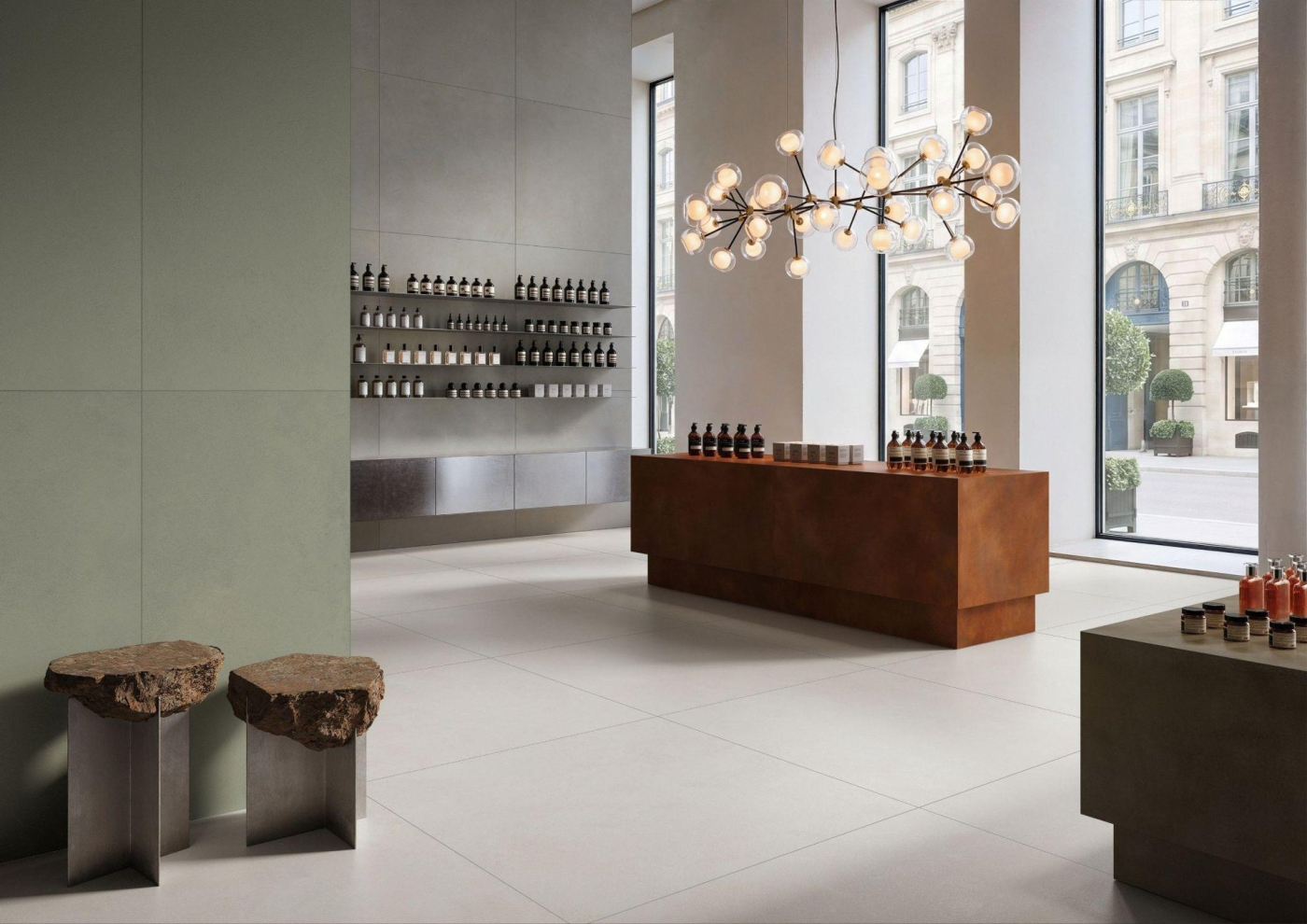
At Cersaie 2026, VitrA Tiles presented The Code concept and a series of innovations to industry professionals, with its Material Intelligence approach as the guiding framework.
Bologna, Italy: VitrA Tiles took part in Cersaie 2026, the international exhibition dedicated to ceramic tiles and bathroom furnishings, held in Bologna, Italy from 21 to 25 September, welcoming customers, architects, designers and professionals from across the sector. Its presence was built around the Material Intelligence concept, through which it presented the 2027 collections and its latest innovations.
“Every material has a code. Material Intelligence deciphers it.” This idea sits at the heart of how VitrA Tiles approaches design: the brand reinterprets materials found in nature by uniting research, advanced technology and design know-how. Building on the aesthetic and technical possibilities that nature offers, VitrA Tiles turns these materials into original surfaces, giving contemporary architecture fresh sources of inspiration.
A trio of design languages
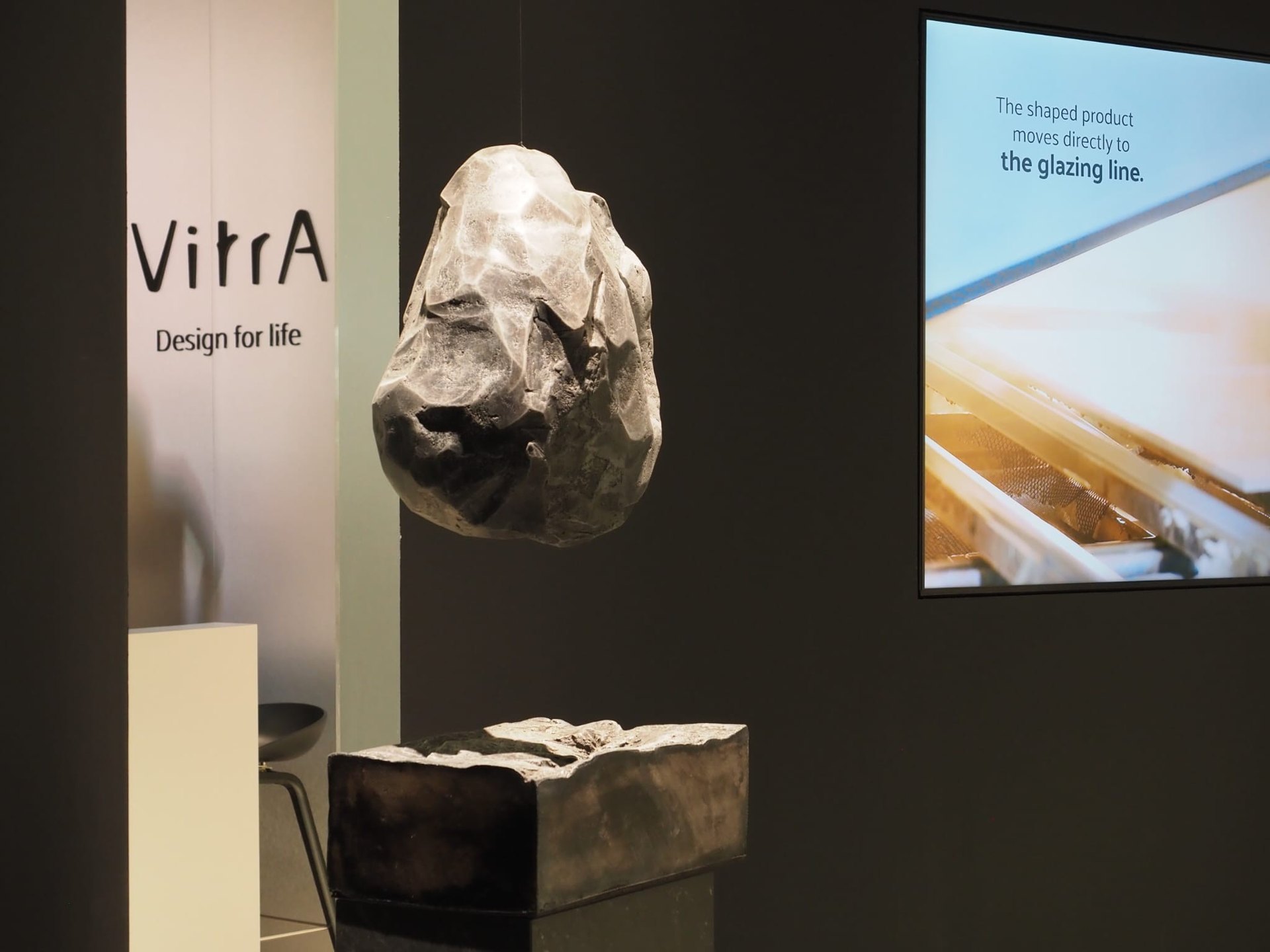
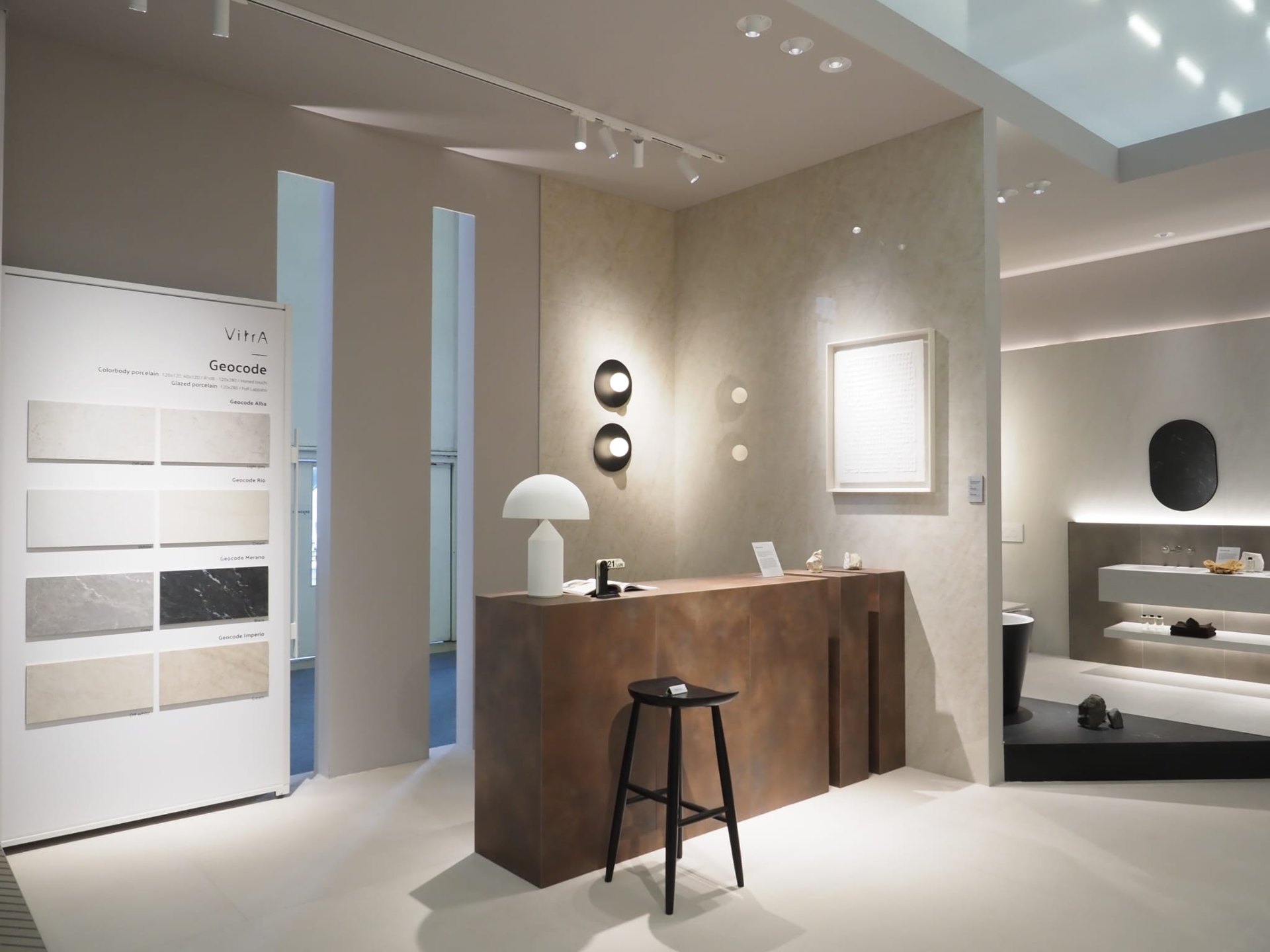
In practice, The Code concept is expressed through three design languages, which give rise to the Resincode, Geocode and Metacode collections. Visitors to Cersaie can see all three on the VitrA Tiles stand.
Resincode takes its cue from the porous texture of natural concrete, rich in minerals, with gradual shifts and layered surface effects, giving contemporary interiors a calm, minimalist and refined finish. Geocode is based on limestone, marble, quartzite and gneiss from Spain, reinterpreting the rich geological legacy of natural stone for ceramic surfaces in a contemporary way. It is offered in four surface types, named Alba, Imperio, Rio and Merano. Metacode comes in three separate finishes, toned in gold, iron and copper. It recreates the soft reflections and gentle tonal shifts of patinated metal on ceramic, pairing industrial character with elegance.
The technology behind the surfaces
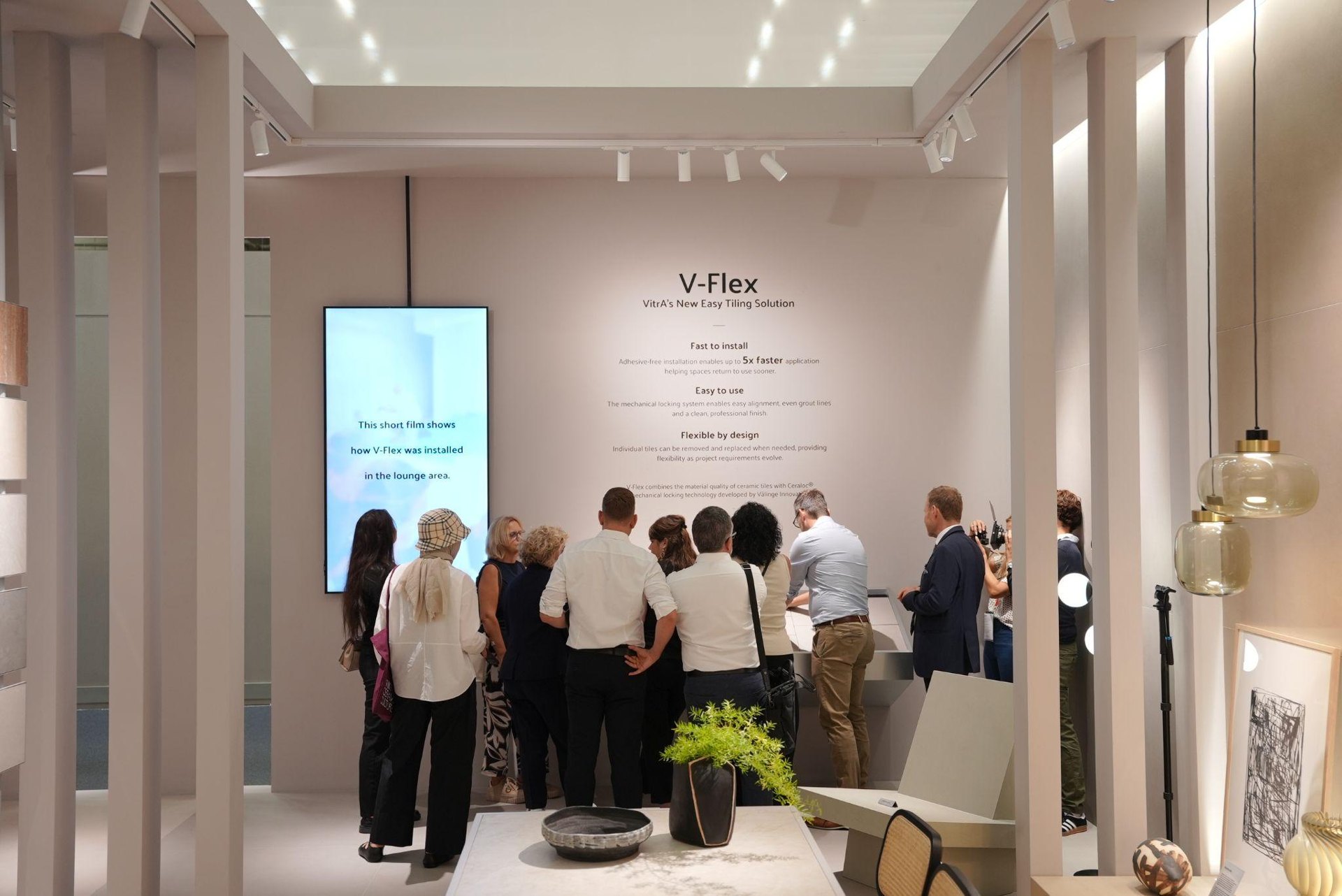
Alongside the new collections, VitrA Tiles used Cersaie 2026 to present two innovations, V-Flex and V-Tone.
V-Flex is a tile installation system that needs no adhesive, and it runs on Välinge’s Ceraloc® locking technology. Its specially designed side profiles let the tiles bond mechanically, so installation can be up to five times faster than with conventional bonded tiles. The system makes precise alignment easier and keeps grout lines even, leaving a neat, professional finish. Because single tiles can be lifted out and replaced when required, maintenance and repair become far simpler. Acoustic comfort is a further benefit. V-Flex is suggested for shops and store chains, showrooms, offices and hotels, as well as educational facilities and commercial spaces.
V-Tone addresses the tonal variation that can arise in ceramic production, keeping colour consistent and preserving design integrity from one surface to the next. Work to integrate V-Tone technology into the VitrA Tiles production lines is still under way.
About the Company: VitrA Tiles
Home to three brands, VitrA, engers and Villeroy & Boch, VitrA Tiles is one of Türkiye’s leading exporters of ceramic tiles to Europe and the EU. The company was founded in Tuzla, Istanbul in 1991 and in Bozüyük, Bilecik in 1992, and today it runs two production plants employing around 2,000 people, with capacity to produce 31 million square metres each year. Its Bozüyük Plant has been recognised for Industry 4.0 and digital transformation by the Global Lighthouse Network of the World Economic Forum, and is counted among the most advanced tile factories in the world. Uniting advanced production, design excellence and sustainability, VitrA Tiles provides integrated ceramic tile solutions that improve living spaces around the globe.
 Heart
Heart Haha
Haha Love
Love Wow
Wow Yay
Yay Sad
Sad Poop
Poop Angry
Angry
