
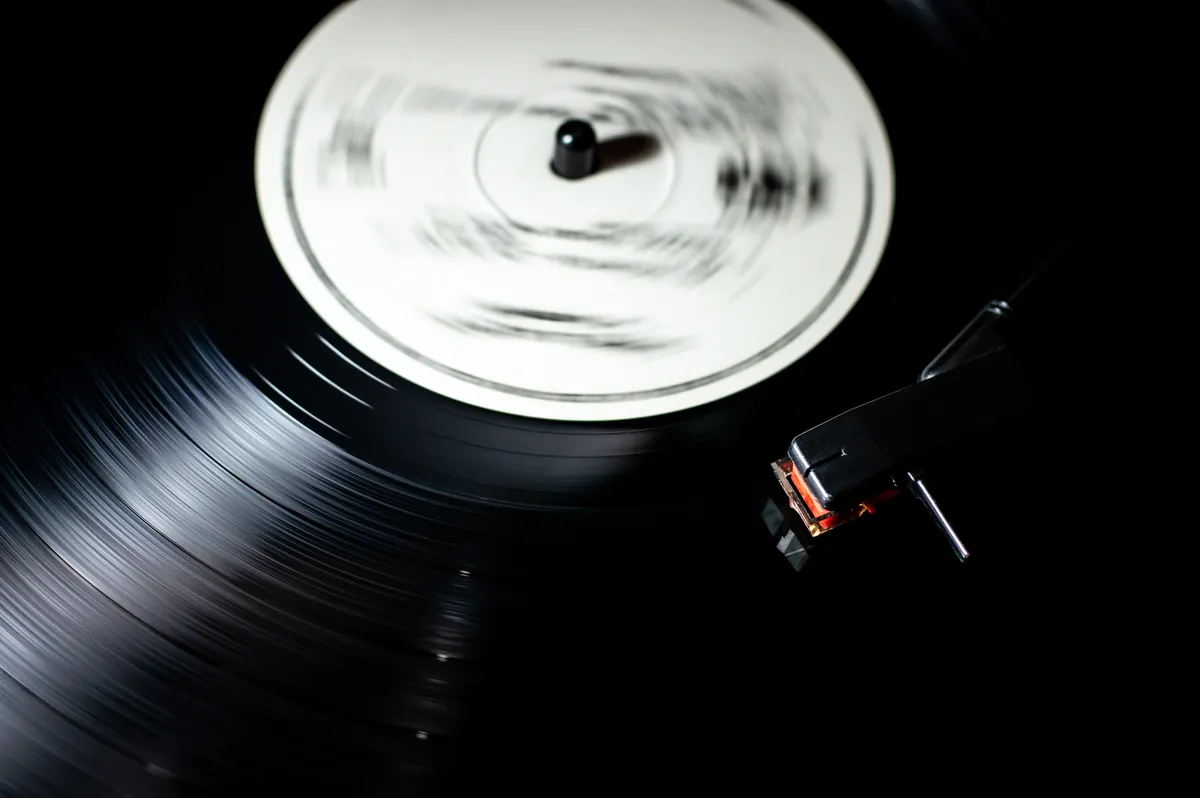
There is something quietly momentous about the way the Shanghai Symphony Shostakovich cycle has begun: not with a single, flagship release but with four symphonies arriving at once, including three that belong to the most grief-saturated sequence Shostakovich ever produced. Symphonies Nos. 5, 7, 8 and 9 were released digitally at midnight by the Shanghai Symphony Orchestra and Deutsche Grammophon China, alongside a commemorative vinyl box set gathering the Seventh, Eighth and Ninth, collectively known as the War Trilogy.
A project built across four seasons
The cycle, launched during the orchestra’s 2025-26 season, is planned to span four consecutive seasons and cover all 15 of Dmitri Shostakovich’s symphonies. Completion is scheduled for 2029, the year the SSO will mark its 150th anniversary. According to the orchestra and DG China, finishing the project would make the SSO the first Chinese orchestra to record and release the full Shostakovich symphony cycle, a claim that, if realised, would place a single institution at the centre of how this repertoire is understood in the twenty-first century.
Music director Long Yu framed the enterprise in explicitly moral terms. ‘Shostakovich’s music bears witness to history and calls for peace,’ he said. ‘Its spirit remains profoundly relevant across time.’ That kind of statement can sound ceremonial, but in the context of the War Trilogy, with its direct references to the Siege of Leningrad and the devastation of the Second World War, it carries genuine weight. These are not abstractions: the Seventh Symphony was famously performed in besieged Leningrad in 1942, its score flown in by military aircraft.
According to Askonas Holt, Long Yu also serves as Artistic Director and Chief Conductor of the China Philharmonic Orchestra, and holds the position of Honorary Music Director for Life and Chair of the Artistic Committee of the Guangzhou Symphony Orchestra. That breadth of institutional responsibility makes this Shostakovich project one thread in a much larger effort to establish Chinese orchestras within the global classical canon.
Production and the War Trilogy vinyl edition
The first four symphonies were recorded under Deutsche Grammophon producer Christopher Alder and Rainer Maillard, recording engineer and managing director of Emil Berliner Studios. The War Trilogy vinyl edition was cut using Direct Metal Mastering, with stampers made in the United Kingdom and the records pressed on 180-gram vinyl. The set also includes a bilingual Chinese-English booklet with newly commissioned programme notes by musicologist Yandi Yang, vice-chair of the Chinese Musicians’ Association, alongside historical images and photographs from the performances and recording sessions. The care taken over physical presentation suggests an ambition that extends beyond streaming metrics.
The Shanghai Symphony Shostakovich cycle does not emerge from nowhere. A recording partnership with Deutsche Grammophon has been in place since 2018, when the SSO, conducted by Yu, became the first Chinese symphony orchestra to have an album released globally by the label. That release, Gateways, was followed by Das Lied von der Erde and Shanghai! Shanghai!. The orchestra’s connection to Shostakovich himself runs deeper still: its predecessor, the Shanghai Municipal Orchestra, performed the composer’s Piano Concerto No. 1 in 1936, and the SSO introduced Symphony No. 11 to Chinese audiences in 1959, just over a year after the work’s world premiere.
What comes next for the SSO
The cycle will continue to unfold as the SSO’s 2026-27 season takes shape. According to Colin’s Column, violinist Leonidas Kavakos will serve as Artist in Residence that season, performing 10 violin concertos across 8 concerts, a commitment of rare scale, even as the Shostakovich project presses forward alongside it. The two strands together speak to an organisation with considerable ambitions across the coming years.
The remaining symphonies, and the verdict on whether this cycle can sustain its opening momentum across a decade of work, will arrive in stages through to 2029.
 Heart
Heart Haha
Haha Love
Love Wow
Wow Yay
Yay Sad
Sad Poop
Poop Angry
Angry
