
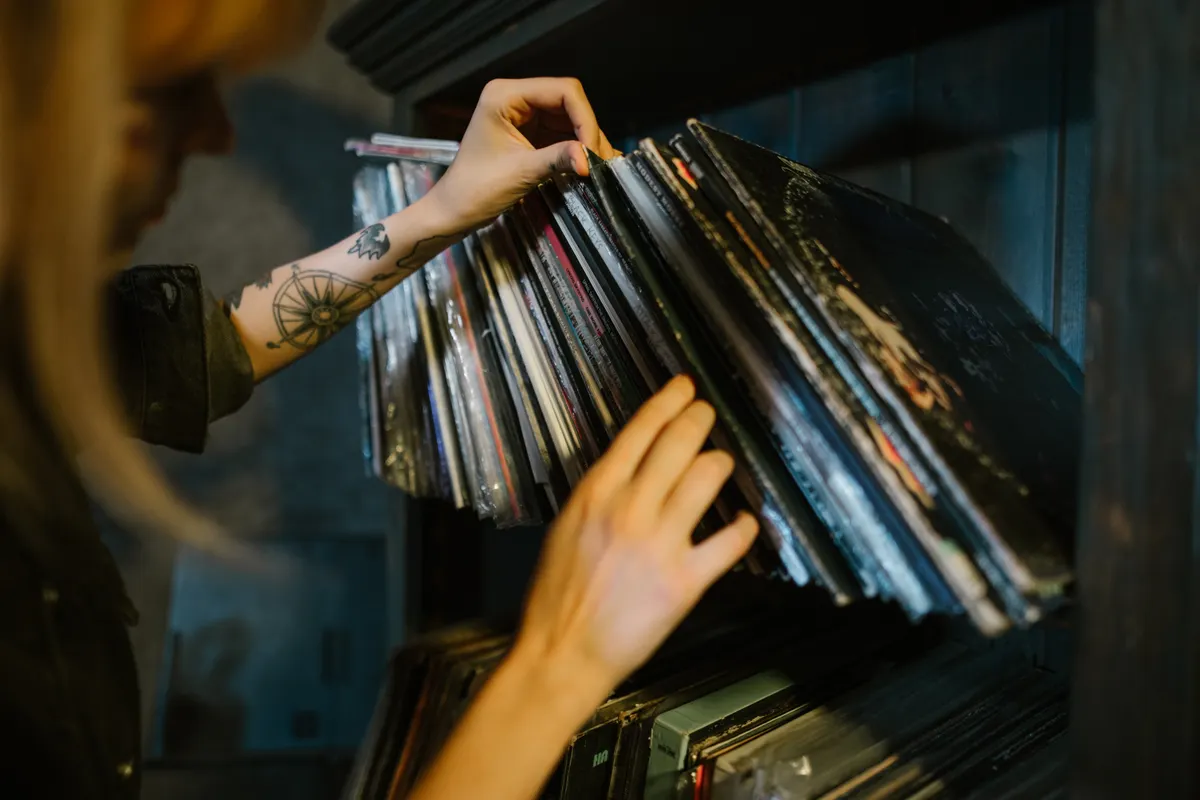
There is something disarming about the way Leah Wellbaum builds a record collection: the Leah Wellbaum essential albums list spans Tibetan singing bowls and Megan Thee Stallion, Chopin and Khruangbin, yet each choice arrives with a specificity that reads less like curation and more like autobiography. Wellbaum, the vocalist, guitarist and primary songwriter of ShowBox Presents-listed trio Slothrust, has shared the five records she could not live without, and the selections trace a remarkably coherent creative philosophy across wildly different genres.
Slothrust is completed by drummer Will Gorin and bassist Kyle Bann, and The Deli Magazine has noted that Wellbaum has been playing in the band for nearly a decade. That longevity has given her records time to sediment into something deeper than passing taste. She is also, per Penn State Events, a Billboard Top 40 artist, and the eclecticism of this list goes some way to explaining a songwriting sensibility that can move between the literary and the visceral without losing its footing. She is currently preparing for a headline tour following a year-and-a-half off the road.
From Musical Theatre Camp to a Life-Long Leah Wellbaum Essential Albums List
The list opens at the beginning. Wellbaum was 14 when she saw Hedwig and the Angry Inch at musical theatre camp, and the effect was, by her account, permanent: ‘my brain was forever changed.’ She returns to the original motion picture soundtrack whenever she feels lost, drawn to what she describes as its aesthetic beauty, its mythological register, and its refusal to abandon humour. For Wellbaum, it remains one of the most singular pieces of work on gender-fluidity and rock and roll, and she credits it with setting her on the path of thinking about gender expansively.
Fiona Apple’s The Idler Wheel Is Wiser Than the Driver of the Screw and Whipping Cords Will Serve You More Than Ropes Will Ever Do follows. Apple has been a lyrical touchstone for Wellbaum since she was young, and this particular album is where she locates Apple’s gift most precisely: the ability to make ‘challenging words fit effortlessly into songs.’ It is a craft Wellbaum says she actively pursues in her own writing. Apple’s boldness, her philosophical surrealism, her disregard for convention, Wellbaum frames these qualities as a kind of permission: ‘Her work is brave and offers me permission to lean into the dark corners of my creature consciousness even when it’s a little scary.’
The third choice is the one that most clearly shows a guitarist thinking. Wellbaum found The Best of John Fahey 1959-1977 as a teenager at her local public library, checked it out on a whim, and was introduced to fingerpicking in one sitting. The image she returns to is the cover: Fahey holding an acoustic guitar with ‘a strange and knowing look in his eye.’ His range (from traditional Christian hymns to blues to experimental soundscape) has made him, in her words, ‘a leading sonic reference for me since the beginning.’
Queen Latifah, Hole, and a Greenroom Encounter Worth Telling
Rap arrived early for Wellbaum, alongside musical theatre, and Queen Latifah’s Black Reign is her representative from that world. She describes it as ‘a beautiful and revolutionary rap album,’ positive and overtly feminist, peace-forward in its intention. The song ‘U.N.I.T.Y.’ functions for her almost as a moral programme: ‘if everyone listened to the song “U.N.I.T.Y.” first thing in the morning, the world would be a better place.’
The fifth album comes with a story attached. Live Through This by Hole is, for Wellbaum, a masterclass in blending the specific and visceral with the universal, a record that ‘looks at gender dynamics in an invitational way that cleverly challenges the listener to question their own position of power and victimhood.’ But she cannot mention it without recounting the night Slothrust opened for a friend’s band at the Troubadour in 2015, when Courtney Love attended the show with Pamela Anderson.
The details are choice. During Slothrust’s set, Love was reportedly in the greenroom and ‘pushed our booking agent out of the way to watch us play.’ The band, shocked and honoured, learned about it after the fact through their label, who reached out via a mutual contact to ask Love what she had made of the show. Her response, Wellbaum says, was ‘the second best thing she could have said’: despite photographic evidence, Love claimed she was never there at all. As an endorsement wrapped in deniability, it is hard to imagine a more perfectly Courtney Love conclusion to anyone’s list of essential records.
 Heart
Heart Haha
Haha Love
Love Wow
Wow Yay
Yay Sad
Sad Poop
Poop Angry
Angry
