
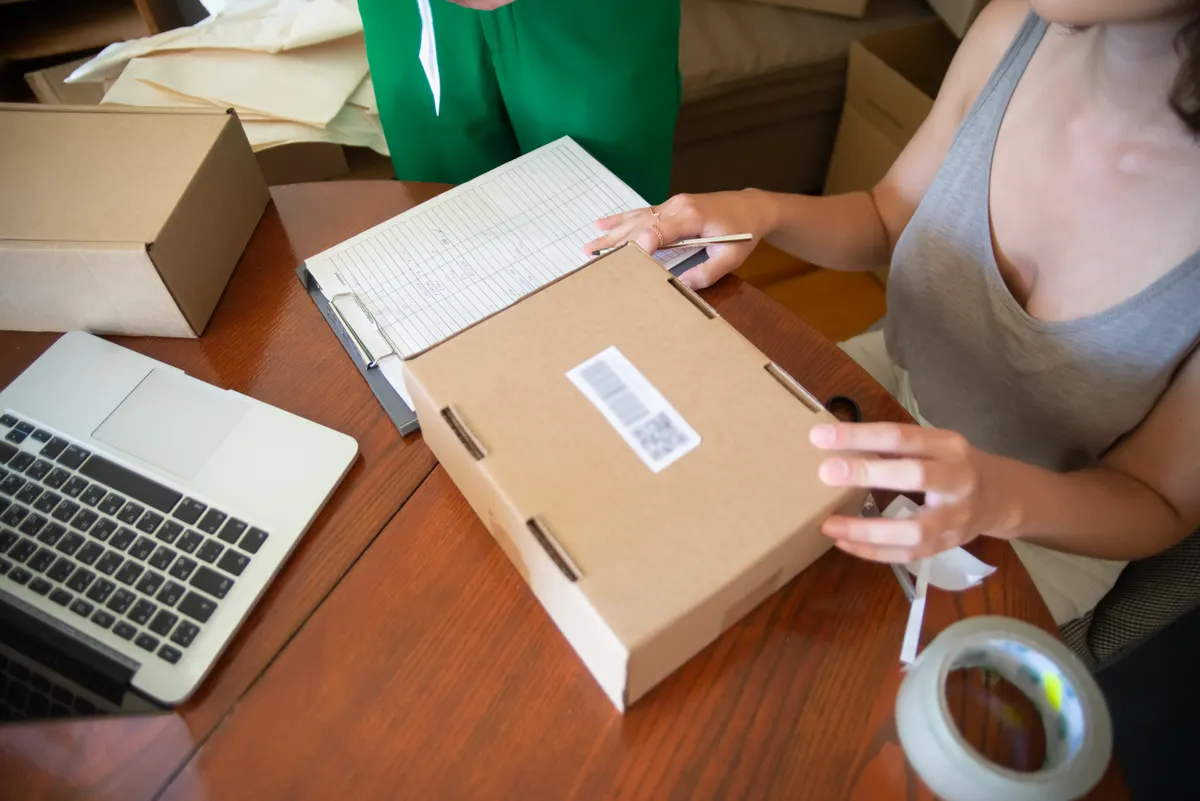
There is something fittingly quiet about the Columbia House mail-order closure: no press release, no farewell tour, just a note on the company’s website confirming that new orders will stop being accepted after 15 September. A business that once enrolled 16 million members and employed 3,500 people at its Terre Haute, Indiana warehouse is ending not with a bang but with a cutoff date. Customers holding credits or book orders can continue purchasing through that date, but after that, the last trace of a 71-year operation disappears entirely.
From Columbia Record Club to Cultural Phenomenon
Columbia Records launched the Columbia Record Club in 1955, initially as a means of reaching consumers in rural and suburban areas without convenient access to record shops. The premise was simple and the logistics were not: a catalogue arrived in the post, you ticked your selections, and the music came to you. What followed was a decades-long expansion through every format the consumer electronics industry could produce, vinyl, reel-to-reel, 8-track, cassette, and eventually the compact disc, which would become the service’s defining medium and, ultimately, its undoing.
The offer that lodged Columbia House permanently in the cultural memory was the one printed on those ubiquitous mailers: eight CDs for a penny. As SPIN detailed in its 2021 history of the CD-club phenomenon, the catch arrived in the small print. Members were required to purchase a set number of albums at full club prices, and the service operated on a negative-option billing system, meaning that unless a member actively declined the month’s selection, an unwanted disc would arrive automatically, charged accordingly. It was a masterclass in the economics of inertia.
By the 1990s, Columbia House and its principal rival BMG Music Service were dominant forces in physical music retail. Inside the Terre Haute facility, workers were reportedly walking as much as 14 to 20 miles a day navigating warehouse shelves to fulfil orders. The scale was almost absurd: a mail-order club had become a logistics operation that dwarfed many conventional retailers.
Corporate Turbulence and the Columbia House Mail-Order Closure
The corporate history behind those penny-CD envelopes was considerably more tangled than the cheerful mailers suggested. In 1991, according to Stereogum, Columbia’s parent company Sony sold half of Columbia House to Time Warner, which merged the service with its own Time Life home video and music clubs. The resulting entity was large, unwieldy, and (as it turned out) poorly positioned for what was coming.
A merger with online retailer CDNow in 1999 quickly fizzled. CDNow was soon purchased by Bertelsmann and partially absorbed into the BMG Music club under the name BeMusic, before Amazon bought it in 2001. The sequence reads now like a series of attempts to graft analogue-era thinking onto a digital world that had already moved on. BMG eventually acquired Columbia House outright in 2005, and the music mail-order operation ceased in 2009 as downloads and streaming eroded the market for physical albums beyond recovery.
The Columbia House name survived in diminished form as a DVD and Blu-ray operation. In 2015, the American branch filed for bankruptcy, another chapter in a slow unwinding that had been under way for years. There was even a period when plans to launch a vinyl record club under the Columbia House branding were under consideration, a prospectively nostalgic pivot that, Stereogum reports, did not materialise.
What remained was a small direct-to-consumer books business, which is now also closing. The development was first reported by Cord Cutter News. For anyone who came of age ordering records from a catalogue, or who spent a guilty adolescent month ignoring a negative-option notice about a Celine Dion album they absolutely did not want, the Columbia House mail-order closure carries a particular weight, the end not just of a company, but of an entire relationship between listener and recorded music. Columbia Records launched the club as a means of getting music into homes; it worked, for longer than most anyone might have predicted, until the homes simply stopped needing the post for that purpose.
 Heart
Heart Haha
Haha Love
Love Wow
Wow Yay
Yay Sad
Sad Poop
Poop Angry
Angry
